Seeing Section 307 IPC on an FIR immediately raises serious concerns. The provision deals with attempt to murder, one of the gravest charges under Indian criminal law. With India’s criminal law overhaul taking effect on 1 July 2024, the offence now sits under Section 109 of the Bharatiya Nyaya Sanhita, 2023 (BNS), though Section 307 IPC continues to govern older incidents.
Whether you are an accused person trying to understand your legal exposure or a complainant seeking clarity on how the law treats a violent attack, this guide breaks down the essentials. We cover the legal meaning of attempt to murder, the IPC-to-BNS shift, punishment structures, bail prospects, and key Supreme Court rulings.
What Is Section 307 IPC? Meaning of Attempt to Murder
Section 307 IPC punishes a person who does an act with the intention or knowledge, and under such circumstances, that if the act caused death, they would be guilty of murder.
Notice what the law focuses on: the state of mind and the nature of the act, not the final outcome. The victim does not have to die for the offence of attempt to murder under IPC to be alleged or proved. Even if a bullet misses its target or timely medical care saves the victim, the charge can still stand if the prosecution proves the required mental element.
A critical boundary in understanding what is Section 307 IPC is the line between mere preparation and an actual attempt. Simply thinking about harming someone, or even buying a weapon, is not enough to trigger this section. Criminal liability under Section 307 begins only when a person moves past planning and takes a direct, overt step toward executing the fatal act.
Section 307 IPC vs Section 109 BNS: Which Law Applies?
India replaced the Indian Penal Code, 1860 with the Bharatiya Nyaya Sanhita, 2023 (BNS) effective 1 July 2024. Which provision applies to a case depends on when the alleged offence occurred.
Under the savings provisions, Section 307 IPC continues to apply to incidents that took place before 1 July 2024, as well as trials and appeals arising from them. For conduct occurring on or after 1 July 2024, Section 109 BNS governs the offence. Be careful not to confuse the statutes: Section 109 is part of the BNS (substantive criminal law), not the BNSS (which handles criminal procedure).
What Are the Essential Ingredients of Section 307 IPC?
To secure a conviction, the prosecution cannot rely on dramatic allegations alone. Courts evaluate the ingredients of Section 307 IPC through three interconnected elements:
-
Intention or knowledge: The prosecution must prove the accused acted with the specific intention to kill, or with the knowledge that their act was so imminently dangerous that it would likely cause death, such that if death had resulted, it would amount to murder.
-
An overt act toward the offence: There must be physical conduct aimed at carrying out the crime, moving decisively beyond planning.
-
The surrounding circumstances: Courts assess the mental element and the nature of the act from the evidence as a whole, rather than viewing a single action in isolation.
Attempt vs Preparation: What Is the Difference?
The statute itself uses clear illustrations to separate preparation from an attempt:
-
Firearms: If A intends to murder Z, buys a gun, and loads it, A has only made preparations and has not yet committed an offence under this section. The moment A fires the gun at Z, the conduct crosses into an attempt.
-
Poison: If A buys poison, mixes it with food, and keeps the dish in their own possession, it remains preparation. Once A places that poisoned food on Z’s table, or hands it to someone to serve to Z, the statutory line is crossed.
Not every reckless act that comes close to causing injury automatically becomes an attempt to murder. Without the required statutory mental element, intention or knowledge of the degree needed for murder, an assault may fall under lesser offences like voluntarily causing hurt or grievous hurt.
Is Serious or Life-Threatening Injury Necessary Under Section 307 IPC?
The answer is no. A grievous or life-threatening injury is not a mandatory requirement to attract Section 307 IPC or Section 109 BNS.
While the actual injury helps a judge gauge what the attacker intended, the wound alone does not decide the case. A minor scratch does not automatically defeat a Section 307 charge if the attacker swung a lethal weapon at the victim’s neck and missed. Conversely, a serious injury does not automatically prove an intention to kill. Courts examine the broader picture: the type of weapon used, the force applied, the body part targeted, the number of blows, verbal threats made during the attack, motive, medical reports, and the accused’s overall conduct.
Two Supreme Court decisions illustrate how this balance works:
-
State of Madhya Pradesh v. Kanha @ Omprakash (2019): The Supreme Court reiterated that proof of grievous or life-threatening hurt is not a prerequisite for Section 307. Intention can be inferred from the nature of the injury alongside the surrounding circumstances.
-
Surender Kumar v. State of Haryana (2026): In a case involving a belated request to add Section 307 during trial based on conflicting medical opinions over a head injury, the Supreme Court clarified that while grievous injury is not a prerequisite, the nature of the hurt by itself cannot justify a Section 307 charge. Because the complainant had never alleged an intention to kill and raised the plea late in the trial, the Court declined to interfere, emphasizing that evidence of intention or knowledge remains decisive.
What Is the Punishment Under Section 307 IPC and Section 109 BNS?
The punishment for attempt to murder in India scales up depending on whether the victim suffered hurt and whether the offender was already serving a life sentence.
Look closely at the third row. The wording of Section 109(2) BNS is not identical to the old IPC clause. By explicitly adding “imprisonment for life, which shall mean the remainder of that person’s natural life” alongside the death penalty, the BNS codifies an alternative, severe statutory sentence for life convicts who cause hurt while attempting murder.
Is Section 307 IPC Bailable or Non-Bailable?
Both Section 307 IPC (under the old CrPC classification) and Section 109 BNS (under the First Schedule of the BNSS) are classified as cognizable, non-bailable, and triable exclusively by the Court of Session.
Two common misunderstandings often cause panic here:
-
“Non-bailable” does not mean bail is impossible. It simply means you cannot claim bail as an automatic right at the police station. Instead, a court must decide whether to grant bail based on the facts.
-
“Cognizable” does not mean arrest is mandatory. While police have the authority to investigate and arrest without a warrant in cognizable cases, any arrest must still comply with statutory safeguards and legal necessity.
Can Bail Be Granted in a Section 307 IPC or BNS Section 109 Case?
Yes, courts can and do grant bail in attempt to murder cases, though scrutiny is strict. The remedy depends on whether the accused has been arrested.
Anticipatory Bail
If you fear arrest after an FIR is registered, you can apply for anticipatory bail before the Sessions Court or High Court. For proceedings governed by the new procedural law, this application is filed under Section 482 BNSS; for older proceedings still under the previous code, Section 438 CrPC applies.
Regular Bail
Once arrested and taken into custody, the accused can seek regular bail from the competent court. Securing bail is never automatic, courts do not grant it merely because an accused has a clean record or because the victim’s injury appears minor.
What May the Court Consider?
Bail decisions rest on judicial discretion and the specific facts on record. While there is no rigid, exhaustive statutory checklist, judges commonly weigh:
-
The specific role attributed to the accused in the incident.
-
The nature of the allegations, weapon used, and medical evidence.
-
Material collected during the investigation so far.
-
The accused’s criminal antecedents.
-
The risk of absconding, tampering with evidence, or intimidating witnesses.
-
The duration of custody already undergone and whether the chargesheet has been filed.
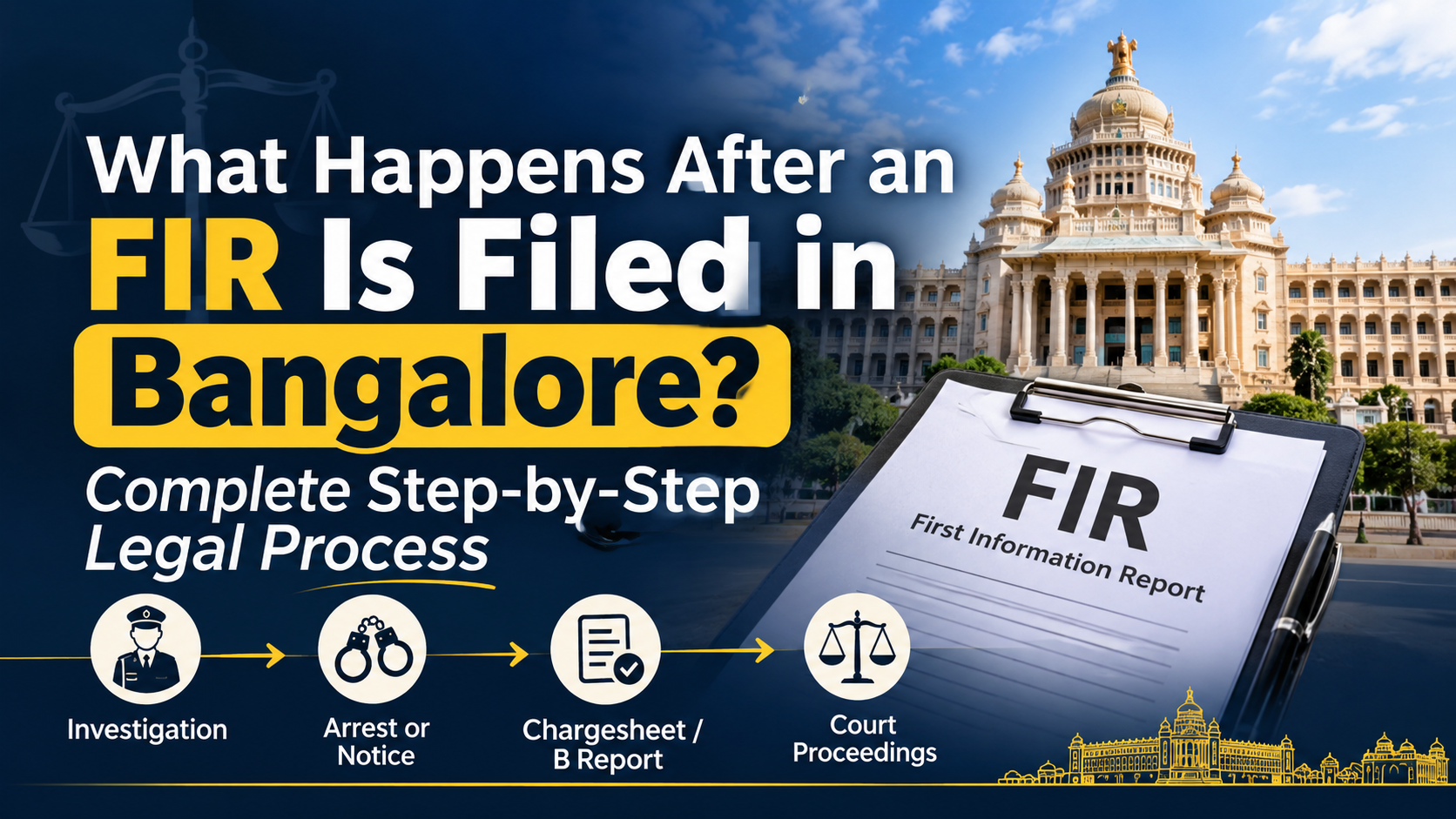
What Happens After an FIR Is Registered for Attempt to Murder?
An FIR is an allegation that sets the criminal law in motion; it is not a finding of guilt. While the exact timeline varies by case, proceedings generally follow this sequence:
-
FIR registration: Police record the complainant’s version of events and register the offence.
-
Medical examination: The injured victim is examined, and doctors prepare a Medico-Legal Case (MLC) report detailing the injuries.
-
Investigation: The investigating officer records witness statements, inspects the scene, and collects physical evidence, weapons, or CCTV footage.
-
Arrest and bail: If legally justified, the police may arrest the accused, triggering custody remand or bail proceedings.
-
Chargesheet: Once the investigation concludes, police file a final report (chargesheet) before the Magistrate.
-
Committal and Sessions trial: Because attempt to murder is triable by a Court of Session, the Magistrate commits the case to the Sessions Court for charge-framing and trial.
What Legal Options May Be Available to an Accused Person?
If you are named in a Section 307 IPC or Section 109 BNS case, your immediate steps should be structured and legally sound:
-
Apply for bail: Seek anticipatory or regular bail promptly where the facts support it.
-
Scrutinise the evidence: Have legal counsel closely examine the FIR, witness statements, and medical reports for inconsistencies or overstatement of charges.
-
Contest the charge: At the charge-framing stage, argue for discharge or alteration to a lesser offence if the material does not show an intention to kill.
-
High Court remedies: Assess whether approaching the High Court for quashing or other relief is legally maintainable.
Many people ask if settling the dispute with the victim ends the case. Attempt to murder is non-compoundable, meaning a private compromise cannot automatically close the prosecution. While a High Court may exercise its inherent jurisdiction to quash proceedings in rare, exceptional circumstances, such relief is strictly discretionary and never guaranteed simply because both sides have settled.
Important Supreme Court Judgments on Section 307 IPC
Indian courts rely heavily on established Supreme Court principles when deciding attempt to murder cases:
-
State of Madhya Pradesh v. Kanha @ Omprakash (2019): Clarified that a grievous or life-threatening injury is not required; intention and surrounding circumstances determine liability.
-
Hari Kishan v. Sukhbir Singh (1988): Held that the intention or knowledge must be of the specific kind required for murder, inferred from the nature of the weapon, manner of attack, and circumstances rather than the result alone.
-
Vasant Vithu Jadhav v. State of Maharashtra (2004): Established that an attempt need not be the ultimate act before death; intention coupled with an overt act in execution is sufficient.
-
Surender Kumar v. State of Haryana (2026): Reaffirmed that the nature of the injury alone cannot establish the necessary intention or knowledge for Section 307.
Frequently Asked Questions About Section 307 IPC
What is Section 307 IPC in simple words?
Section 307 IPC punishes an attempt to murder. It applies when someone commits an act with the intention or knowledge that it could cause death, under circumstances that would make it murder if the victim died.
What is the new BNS section for Section 307 IPC?
Section 109 of the Bharatiya Nyaya Sanhita, 2023 (BNS) replaces Section 307 IPC for offences committed on or after 1 July 2024. Older cases continue under Section 307 IPC.
Can Section 307 IPC apply if the victim has only minor injuries?
Yes. A serious or life-threatening injury is not mandatory. If the evidence proves the attacker intended to kill, the offence can still apply even if the resulting injury is simple or minor.
Is Section 307 IPC a non-bailable offence?
Yes. Both Section 307 IPC and Section 109 BNS are cognizable and non-bailable offences triable by the Court of Session. Bail is not an automatic right, though courts may grant it based on case facts.
Can a Section 307 IPC case be closed after a compromise?
No, not automatically. Attempt to murder is a non-compoundable offence. A private settlement does not end the trial, though parties occasionally approach the High Court for discretionary quashing depending on the facts.
Conclusion: Understanding the Legal Position in an Attempt to Murder Case
Having Section 307 IPC or Section 109 BNS invoked in an FIR is serious, but an accusation is never a conviction. Ultimately, the law turns on whether the evidence proves the required intention or knowledge alongside an overt act. Because every incident turns on its own medical records, witness accounts, and procedural history, anyone facing an FIR, bail hearing, or trial should consult a qualified criminal lawyer to evaluate their specific facts.

I am Anjan Kumar, the founder of Advocates in Bangalore, a trusted law firm with over 15 years of legal experience and 12,000+ satisfied clients across Bangalore and Karnataka. Specializing in criminal law, divorce law, property disputes, and corporate legal matters, we handle High Court, District Court, and Family Court cases with professionalism and tailored solutions.
Our team has successfully represented 12,000+ clients, earning a reputation as trusted advocates in Bangalore. We operate 24/7, providing expert legal guidance and strong court representation.
At Advocates in Bangalore, we believe in honest communication, ethical practices, and results. We’re here to protect your rights with integrity.
For legal consultation: contact us at anjankumar5328@gmail.com | Call: +91-9886747301